Tina Russell · 27 September 2026
Crestwood Vendor Networks Connect Market Expansion With Historic Preservation and Youth Funding Programs
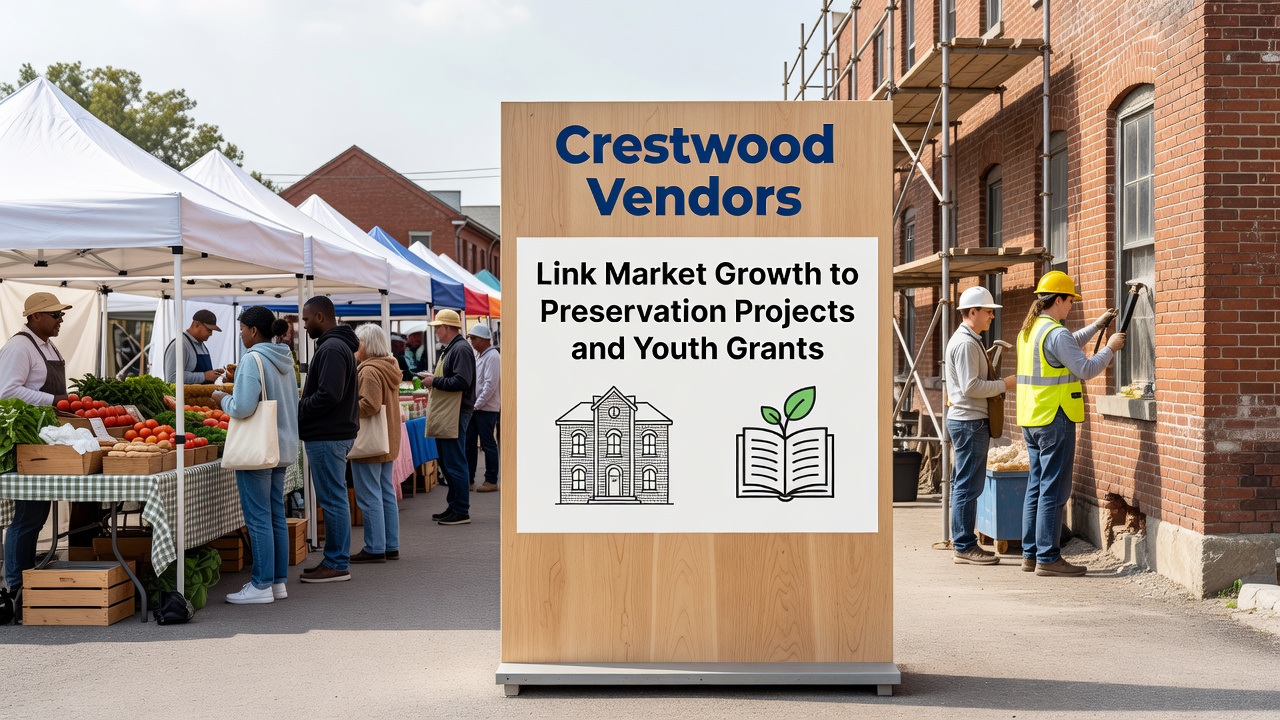
Vendor activity across Crestwood has expanded steadily over recent years, and data from local economic reports show how that growth now channels directly into preservation work and youth grant distribution. Market organizers track booth numbers, sales volumes, and seasonal participation rates, then allocate portions of revenue and sponsorship proceeds to restoration projects along Main Street and to scholarship-style grants for residents under age twenty-five. Figures from the 2025 vendor association summary indicate a thirty-two percent rise in registered participants compared with 2023 levels, creating a larger pool of funds that preservation committees and youth program coordinators draw upon each quarter.
Market Growth Patterns and Revenue Allocation
Weekly markets at the old rail-yard site and monthly pop-up events downtown have both posted consistent increases in foot traffic. Organizers record average daily sales that climbed from roughly eighteen thousand dollars in early 2024 to more than twenty-seven thousand dollars by mid-2025, according to the Crestwood Vendor Cooperative ledger. Those totals feed a dedicated allocation formula: twenty-five percent of net proceeds move to a preservation escrow account, while fifteen percent supports a youth grant pool administered through the community foundation. The remaining revenue covers operational costs and vendor support services such as equipment loans and marketing assistance.
Observers note that seasonal spikes during harvest festivals and holiday craft fairs amplify the effect. In one documented case, a single weekend event generated an extra forty-eight hundred dollars for the preservation fund, enough to cover initial engineering assessments for stabilizing the 1920s brick storefronts on Elm Avenue. Youth grants from the same period funded three separate after-school coding clubs and two summer apprenticeship placements at local trades businesses.
Preservation Projects Funded Through Vendor Proceeds
Preservation work in Crestwood now relies in part on the steady stream of market-linked dollars. Restoration of the former library annex, completed in phases between 2024 and 2025, received thirty-five thousand dollars from vendor contributions, matching funds from a state heritage grant. The project restored original oak flooring, replaced damaged cornices, and installed energy-efficient windows while preserving the building's historic facade. Similar allocations have supported facade repairs at three additional downtown structures and the installation of interpretive signage along the river walk.
Those who've tracked the projects point out that vendor-funded work tends to focus on smaller-scale interventions that larger federal programs often overlook. A recent engineering report prepared for the city planning department lists eight additional buildings scheduled for assessment in the coming fiscal year, with vendor escrow money earmarked as seed funding. The approach allows incremental progress without waiting for multi-year grant cycles to align.
Youth Grant Distribution and Program Outcomes
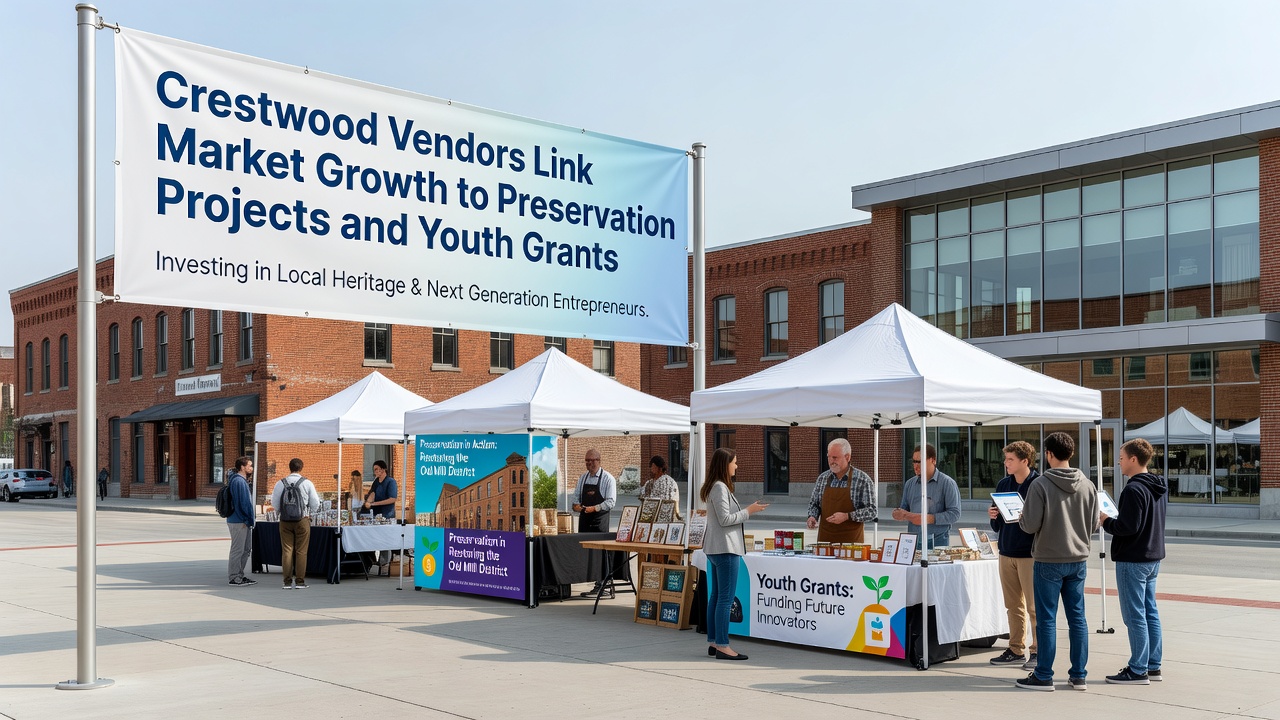
Youth grants operate on a rolling application cycle, with quarterly review panels that include market representatives, educators, and local business owners. Awards range from five hundred to five thousand dollars and cover equipment purchases, workshop fees, transportation costs, and micro-internship stipends. In the most recent cycle ending August 2026, twelve applications received full funding, supporting projects in digital media production, urban agriculture, and small-engine repair training. Recipients submit progress reports that feed back into vendor association newsletters, closing the loop between market activity and program results.
Data compiled by the community foundation shows that sixty-eight percent of grant recipients from the prior two years have either launched small businesses that now participate in Crestwood markets or secured full-time employment with local employers. The statistics appear in the foundation's annual impact summary released each September, providing vendors with measurable returns on their allocated contributions.
September 2026 Developments and Forward Planning
Planning documents released in September 2026 outline an expanded vendor pavilion scheduled for construction adjacent to the river walk, with design features that incorporate salvaged materials from preservation sites. The pavilion will include dedicated space for youth-led pop-up demonstrations, allowing grant recipients to test retail concepts under the same market umbrella that funds their training. Construction timelines project completion by spring 2027, contingent on continued revenue growth and matching support from regional economic development offices.
Conclusion
Crestwood's vendor system demonstrates a closed-loop model in which market expansion directly sustains both physical heritage and skill development for younger residents. Revenue tracking, project milestones, and grant outcome data continue to shape allocation decisions, while September 2026 planning documents signal further integration of preservation and youth initiatives into the physical market infrastructure. The pattern relies on consistent participation numbers and transparent reporting rather than external mandates.